 English
 français
 Deutsch
 español
 italiano


The Rolex GMT-Master 16700 marks the final chapter of the original GMT-Master line, produced from 1988 to 1999 before the GMT-Master II took over. Its key appeal lies in combining the classic aesthetics of earlier GMTs with a sapphire crystal and updated caliber, making it a favorite for those seeking vintage charm with modern reliability. The 16700 offers the iconic dual time zone function, originally designed for Pan Am pilots, and is celebrated for its transitional features bridging vintage and contemporary Rolex eras.
This model houses the automatic Caliber 3175, notable for its quickset date—unlike its predecessor, the 16750—but without the independently adjustable hour hand found in the GMT-Master II. Collectors often seek out the Pepsi (red/blue) and all-black bezel variants, with the former typically commanding a premium. Early tritium-dial examples (marked "SWISS-T<25") are especially desirable, while later models feature luminova. The aluminum bezel inserts, which fade uniquely over time, can also impact value, with original faded inserts highly prized.
Reference 16700 is distinct from the 16710 GMT-Master II; it lacks the independently set hour hand, making it truer to the original GMT concept. Pricing varies based on dial type, bezel insert condition, bracelet originality, and box/papers completeness. When considering a 16700, check for original tritium dials and hands if seeking vintage appeal, and be aware that full sets and unpolished cases command top dollar in today’s market.
What owners love
- The quickset date feature is unique among classic GMTs, making it far more convenient for everyday use compared to the 16710 and earlier models.
- Owners appreciate the slimmer case profile and lightweight feel, which wears noticeably more comfortably than later GMT references.
- The transitional period tritium dials and faded "Pepsi" bezels develop distinctive patina, giving each watch a unique vintage character that collectors prize.
Common Criticisms
- The non-independent hour hand makes local time changes cumbersome when traveling, especially compared to the later 16710's true GMT function.
- Many find the stamped hollow end links and jangly Oyster bracelet less solid and refined than bracelets on newer models.
- The acrylic crystal, while charming, is prone to scratching and requires more frequent maintenance than sapphire-equipped successors.
Reviews & Videos
Right Now on eBay
-
 Rolex GMT-Master 16700 Black Dial Classic Daily Piece $11,950
eBay (US) Paid Link
-
 ROLEX GMT MASTER 16700 40MM DATE BLACK STAINLESS STEEL… $12,190
 -
 Rolex GMT Master Automatic, Black 16700 $10,500
 -
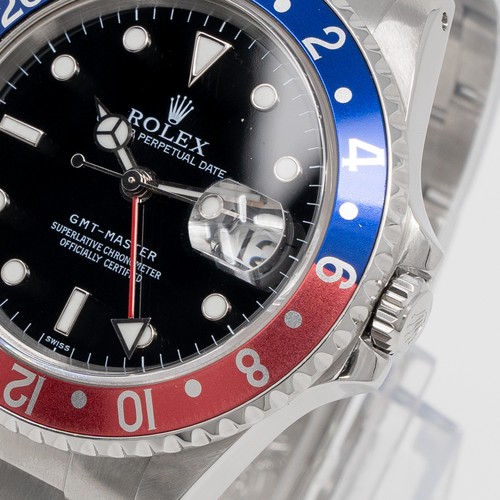 Rolex GMT-Master 16700 "Pepsi", Box & Papers, Stainles… $14,333
 -
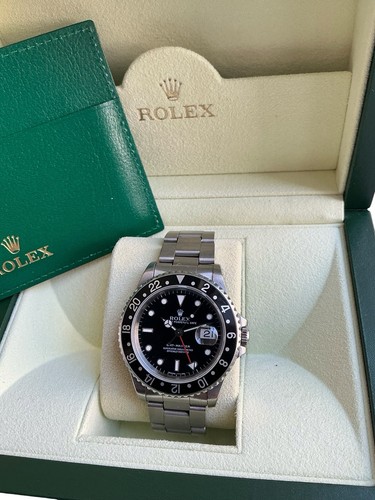 ROLEX GMT MASTER 16700 BLACK DIAL STAINLESS STEEL WI… $9,455
Recent Listings
View All →-
 Rolex FS: 1999 Rolex GMT Master 16700 Pepsi Insert $10,900
WatchUSeek 18 hours ago
-
![[WTS] 1991 Rolex GMT-Master 16700 Pepsi with RSC Service Pa…](https://img.watchpatrol.net/99g4EF3K_B-lqxoFElmemrnfP6s1E8IMESssH16nANQ/rs:fill:600:600/plain/img/full/176eef32c299a2d04dcefa693bd937c1b6792215.jpg) Rolex [WTS] 1991 Rolex GMT-Master 16700 Pepsi with RSC Servi… $11,950
Rolex [WTS] 1991 Rolex GMT-Master 16700 Pepsi with RSC Servi… $11,950Reddit 1 day ago
-
![[WTS] Rolex GMT Master Pepsi / 40mm Ref.16700 / Box & Paper…](https://img.watchpatrol.net/s2woT0W_8ZgIhKd2qJ-OsC4F8RpHvv8knPL3WT5PYIU/rs:fill:600:600/plain/img/full/ec96b1d82245eb66021f4f71a194d637763fd044.jpg) Rolex [WTS] Rolex GMT Master Pepsi / 40mm Ref.16700 / Box & … $14,500
Rolex [WTS] Rolex GMT Master Pepsi / 40mm Ref.16700 / Box & … $14,500 -
 Rolex FSOT: Rolex 16700 GMT Master I Pepsi Tritium, N Serial… $14,995
 -
![[WTS] 1999 Rolex GMT Master Ref. 16700 Coke | Swiss Only | …](https://img.watchpatrol.net/TA5yl8AqTYbWL7BhzN42FplBVUwLVYEbyXA4U50Pv1I/rs:fill:600:600/plain/img/full/c67b04d55f821bd0474e90b824f160b868e7f0f9.jpg) Rolex [WTS] 1999 Rolex GMT Master Ref. 16700 Coke | Swiss On… $14,950
Rolex [WTS] 1999 Rolex GMT Master Ref. 16700 Coke | Swiss On… $14,950
Explore More Rolex Watches
-
 #1
Rolex Datejust 126334 41mm$14,650 $13,250 – $15,880410 listings 15 hours ago
#1
Rolex Datejust 126334 41mm$14,650 $13,250 – $15,880410 listings 15 hours ago -
 #2
Rolex Explorer II 16570 40mm$7,950 $7,250 – $8,845397 listings 20 hours ago
#2
Rolex Explorer II 16570 40mm$7,950 $7,250 – $8,845397 listings 20 hours ago -
 #3
Rolex GMT-Master II Batman 40mm$17,497 $16,500 – $18,400235 listings 23 hours ago
#3
Rolex GMT-Master II Batman 40mm$17,497 $16,500 – $18,400235 listings 23 hours ago -
 #4
Rolex Datejust 126300 41mm$10,500 $9,500 – $11,300229 listings 1 day ago
#4
Rolex Datejust 126300 41mm$10,500 $9,500 – $11,300229 listings 1 day ago -
 #5
Rolex Submariner 16610 40mm$8,999 $8,112 – $9,950204 listings 1 day ago
#5
Rolex Submariner 16610 40mm$8,999 $8,112 – $9,950204 listings 1 day ago -
 #6
Rolex Datejust 16233 36mm$6,590 $5,895 – $7,200190 listings 1 day ago
#6
Rolex Datejust 16233 36mm$6,590 $5,895 – $7,200190 listings 1 day ago -
 #7
Rolex Submariner 126610LN$13,837 $13,250 – $14,761190 listings 2 days ago
#7
Rolex Submariner 126610LN$13,837 $13,250 – $14,761190 listings 2 days ago -
 #8
Rolex Datejust 36mm$8,400 $6,325 – $12,580185 listings 21 hours ago
#8
Rolex Datejust 36mm$8,400 $6,325 – $12,580185 listings 21 hours ago -
 #9
Rolex Explorer 114270 36mm$5,950 $5,600 – $6,400183 listings 3 days ago
#9
Rolex Explorer 114270 36mm$5,950 $5,600 – $6,400183 listings 3 days ago -
 #10
Rolex Datejust 1601 36mm$4,000 $3,600 – $4,950178 listings 3 days ago
#10
Rolex Datejust 1601 36mm$4,000 $3,600 – $4,950178 listings 3 days ago